When we talk about sensory team building for companies, we don't mean a series of separate games. The aim is to build a journey where each sense brings something different to the team: focus, emotion, creativity, intuition, surprise. And by combining all these moments, people feel more present, more connected and, interestingly, more open with each other.
The usual format follows a simple storyline: each station represents one sense, with specific challenges that stimulate it. Some are tech-based, others hands-on, others more introspective. But they all invite people to look, listen, feel and create from a different place than usual.
What is more, the variety of activities means every profile finds their comfort zone. People who like technology get hooked on the VR experiences. Those who prefer hands-on tasks can express themselves with Lego or 3D pens. For those who enjoy scent and taste, the sensory workshops become their favourite moment. And for those drawn to the emotional or the unexpected, the sixth sense adds an almost magical touch.
This combination is what makes the experience memorable and a real tool for internal cohesion.
WHAT SENSORY TEAM BUILDING FOR COMPANIES INCLUDES
We offer two versions of this sensory experience: a Deluxe version, more premium and full of tech and creative elements; and an adapted version, lighter and more accessible, which keeps the essence of each sense but is simplified for limited space or time or tight budgets. Both share the heart of the activity: perception, play and the team's sensory involvement.
The activities can be expanded or simplified depending on the space, the number of attendees and the goals of the event, but the pillars are always the same. Below, I explain what your team will experience.
SIGHT: Immersive reality, focus and visual attention
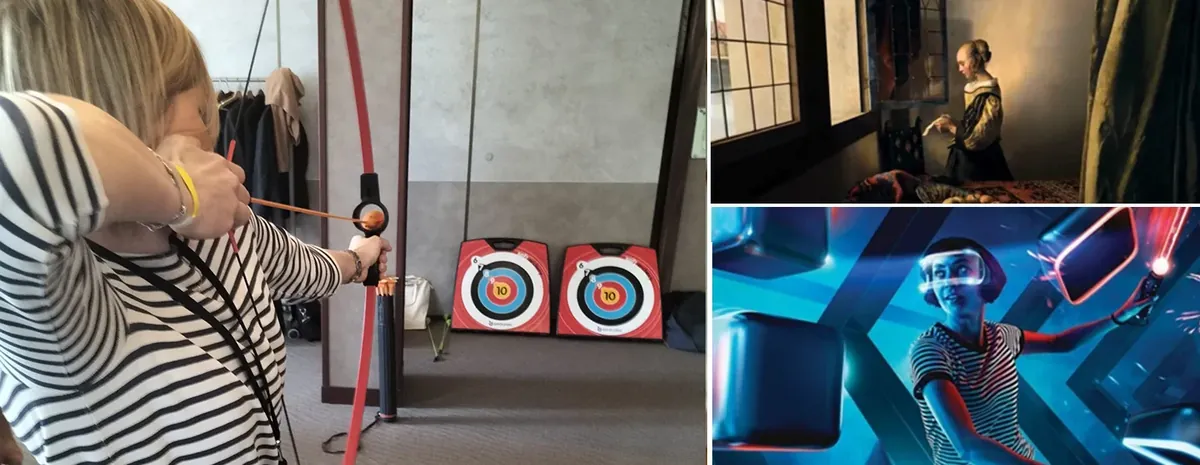
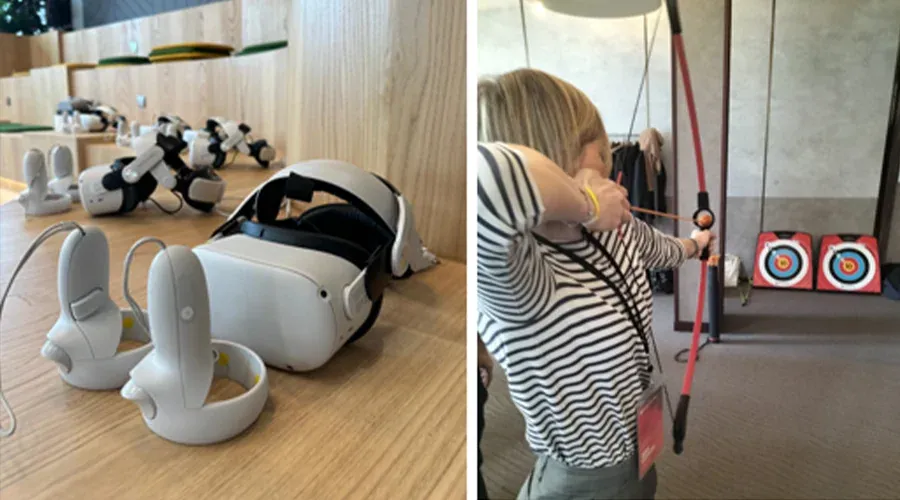
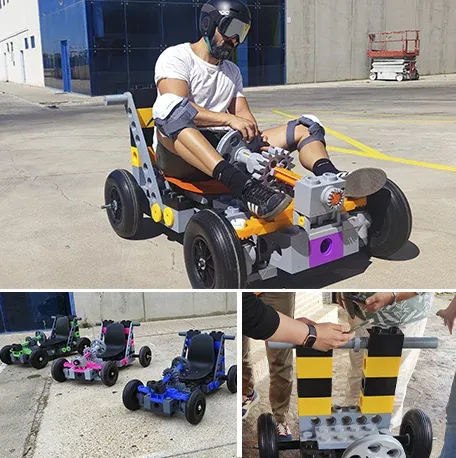
The station dedicated to sight is usually one of the most talked about. The team tries virtual reality activities, with games ranging from slicing beats with lightsabers to living artistic scenes where paintings come to life before their eyes
There are also aim and visual concentration challenges, which create an interesting mix of play and precision.
Here participants work on:
- The ability to focus.
- Visual precision.
- Handling stimuli in changing environments.
- Quick decision-making based on visual information.
Sight sparks spontaneous conversations, comparisons of results and laughter that help break a team's usual stiffness.
SMELL: Aromas, memory and sensory creation
Smell is one of the most emotionally powerful senses. In this activity, the team discovers that link through a short perfume and essences workshop that invites them to identify notes, combine them and create small, unique fragrances
The aim is to show how smell triggers memories, emotions and conversations, creating a kind of connection that is different from the intellectual or verbal kind. Surprisingly, this opens the door to much more natural communication within the team.
TASTE: Food creativity and unexpected flavours
Taste is a sense that brings people together effortlessly. In sensory team building for companies, this part focuses on light food creation.
Participants can see a chocolate 3D printer in action and create their own edible pieces. The mix of technology and flavour creates a very pleasant surprise effect. This part works on:
- Improvisation.
- Fine coordination.
- Aesthetic creativity.
- Spontaneous communication in short tasks.
Taste always leaves a positive, almost celebratory memory that helps reinforce the overall atmosphere of the activity.

TOUCH: Building, textures and hands-on creativity
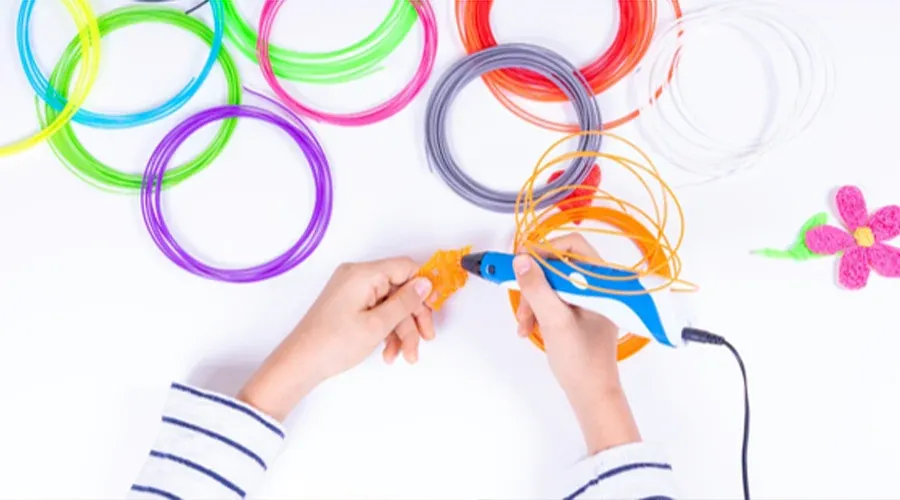
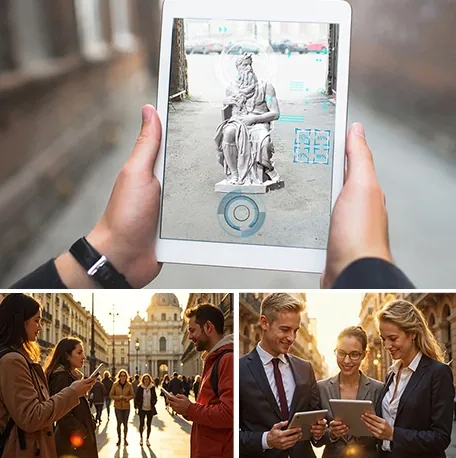
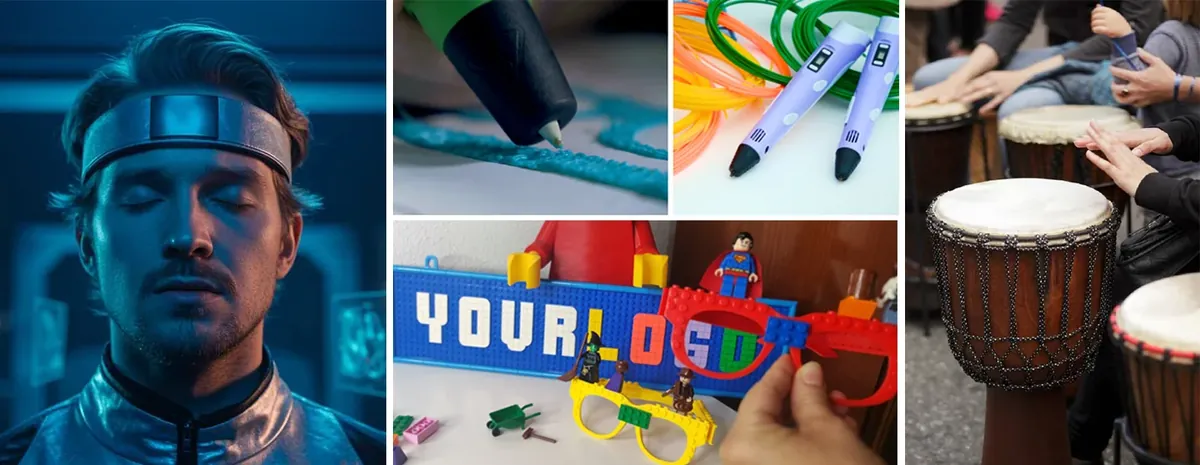
The touch station is probably the station in sensory team building for companies that most encourages joint problem-solving. It uses Lego pieces, assembly challenges or activities with 3D pens, which let people turn ideas into real objects.
Working with their hands has an interesting effect on teams: it lowers pressure, improves the emotional climate and puts people into a kind of relaxed concentration. This is where natural conversations, creative ideas and unexpected roles within the group begin to appear.
HEARING: Rhythm, active listening and coordination
Hearing is worked on through activities that require attention, rhythm and accurate passing on of messages. Activities such as Morse code and Chinese whispers are used, where teams must decode signals and see how information changes as it passes from person to person.
The aim is simple and at the same time profound: to show in a practical way how important clear communication is and how small nuances can change a message passed along a chain. In companies with high turnover, fragmented communication or hybrid teams, this exercise is often an eye-opener.
SIXTH SENSE: Intuition, connection and surprise
The sixth sense is not exactly a physical sense but a metaphorical space where the team explores intuition, attention to others and the ability to connect without relying only on reason, creating activities that generate surprise, emotion and an atmosphere unlike any other team building activity.
This closing part is often one of the moments teams talk about most, because it combines play, reflection and a sense of belonging.